Sewage Smell or Backups? Sewer Line Trouble Explained
Quick Answer: A sewage smell indoors and drains backing up in more than one fixture at the same time both point to the same place: your main sewer line, not an isolated clog under one sink. The smell usually means sewer gas is escaping through a dried-out trap, a cracked vent pipe, or a damaged line, while simultaneous backups mean something is blocking the shared pipe every drain in the house feeds into. Tree roots, aging clay or cast-iron pipe, and grease buildup account for most main-line blockages in the Tulsa area. A camera inspection is the only reliable way to confirm the cause before anyone digs or lines the pipe.
You flush the toilet upstairs and the tub in the basement bathroom gurgles back at you. Or maybe it's simpler than that — a smell that shows up every time you walk past the laundry room, faint at first, then impossible to ignore. Neither one feels like an emergency in the moment. Both are your sewer line telling you something before it turns into standing water on the bathroom floor.
The two symptoms — sewage odor and backed-up drains — don't always show up together, and they don't always share a cause. But both trace back to the same 4- to 6-inch pipe that carries every drop of wastewater from your house to the municipal main. Knowing which one you're dealing with changes what happens next.
Why Your House Smells Like Sewage
A sewage smell inside a home almost always means sewer gas has found a way past a barrier that's supposed to keep it out.
The Trap Under An Unused Fixture Has Dried Out
Every drain — sink, tub, floor drain, washing machine standpipe — has a curved section of pipe called a P-trap that holds a small amount of water as a seal against gas coming back up the line. A guest bathroom that goes unused for weeks, a floor drain in the garage, or a laundry standpipe you rarely run water through can lose that water seal to evaporation, especially during a dry Oklahoma summer. Once the trap runs dry, sewer gas has a clear path into the room. Running water in that fixture for a minute is often enough to refill the seal and stop the smell on the spot.
A Vent Pipe Has Cracked Or Come Loose
Plumbing systems vent through the roof so sewer gas escapes outdoors instead of building up in the pipes. If that vent stack cracks in the attic, disconnects at a joint, or gets blocked by debris or a bird's nest, gas that should exit above the roofline backs up into the house instead. Vent problems are harder to spot than a dry trap because there's no obvious fixture to check — the smell shows up in a hallway or a bedroom with no drain nearby, which is usually the clue that points a plumber toward the attic rather than under a sink.
The Sewer Line Itself Has Cracked Or Separated
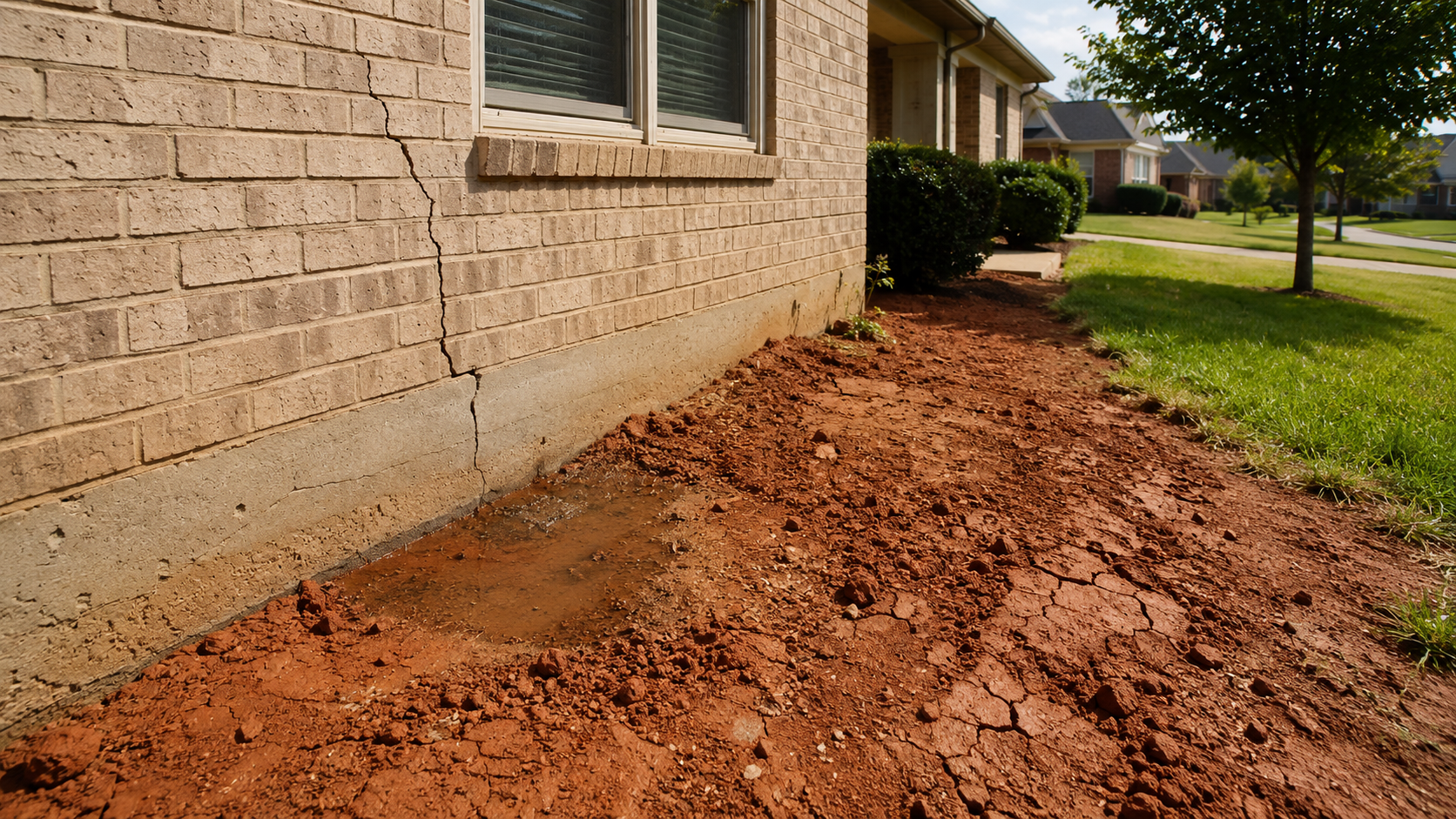
A break in the underground line lets gas escape into the soil near the foundation, where it can seep in through a crack in the slab or around a plumbing penetration. This version of the smell tends to be persistent rather than intermittent, and it often shows up alongside a soft or unusually green patch in the yard where waste is reaching the soil instead of the municipal system.
WARNING: Hydrogen sulfide — the compound behind the rotten-egg smell — is detectable by the human nose at extremely low concentrations, but that sensitivity fades with continued exposure, according to the CDC's Agency for Toxic Substances and Disease Registry. Don't treat a smell that seems to fade on its own as resolved. If the odor is strong, persistent, or returns after you've checked the obvious traps, treat it as a signal to call a plumber rather than something to wait out.
Why Multiple Drains Are Backing Up at Once
A single slow drain usually means a clog local to that fixture. Two or more fixtures backing up together, especially the lowest drain in the house, points somewhere else entirely.
Every Fixture Shares One Main Line
Sinks, tubs, toilets, and the washing machine all tie into a single pipe that runs from your house to the municipal sewer main. A blockage anywhere in that shared line backs waste up behind it, and the backup tends to surface first at whichever drain sits lowest in the house — often a basement floor drain or a ground-floor shower.
Gurgling Is The Line Telling You It's Under Pressure
Air trapped behind a partial blockage has to go somewhere when you flush or drain a sink, and it pushes back up through the nearest connected fixture as a gurgle or bubble. A toilet that gurgles when the washing machine drains, or a tub that bubbles during a flush, is a strong sign the obstruction sits in the shared line rather than in either fixture individually.
Chemical Drain Cleaner Won't Reach A Main-Line Blockage
Store-bought drain cleaners are formulated to dissolve buildup within a few feet of the fixture they're poured into. A clog several feet or more down a main line, especially one caused by roots or a structural break rather than grease, is well beyond where those chemicals can do anything useful — and pouring caustic cleaner down a drain that's already backing up toward you is its own hazard.
TIP: If backups happen after heavy rain and clear up on their own once the ground dries out, that pattern points toward a cracked or separated section of pipe letting groundwater into the line, rather than a stationary blockage. Mention the rain connection when you call — it narrows down what a plumber looks for on camera.
What's Actually Causing the Blockage
Three causes account for most main sewer line problems in the Tulsa area, and each one leaves a slightly different signature.
Tree Roots Follow The Moisture Straight To Your Pipe
Roots grow toward any source of water and nutrients, and a sewer line carrying wastewater is exactly that. Roots enter through hairline cracks or loose joints, then continue growing inside the pipe, catching wipes, grease, and debris until the line narrows to almost nothing. Older clay pipe, common in Tulsa's established neighborhoods, is more vulnerable to root intrusion than modern PVC because its joints are more numerous and less tightly sealed.
Aging Pipe Fails From The Inside Out
Clay and cast-iron sewer lines installed decades ago are reaching the end of their expected service life across much of the metro. Cast iron corrodes and develops rough interior scale that catches debris; clay pipe cracks and shifts as the ground around it moves. Tulsa's clay-heavy soil expands and contracts with the region's wet-to-dry swings, and that movement stresses old pipe joints in a way that flatter, more stable soil doesn't.
Grease And Non-Flushable Items Narrow The Pipe From Within
Cooking grease poured down a kitchen drain doesn't stay liquid once it cools in a pipe — it hardens against the walls and traps everything that flows past it afterward. Wipes labeled “flushable,” paper towels, and feminine hygiene products behave the same way, especially once they combine with grease buildup already inside the line.
How a Plumber Actually Diagnoses It
Guessing at a sewer line problem from the surface only goes so far. A smell here, a slow drain there — none of it tells you exactly where the pipe failed. The line runs underground, out of sight, for its entire length. That's why diagnosis relies on equipment rather than assumption.
Camera Inspection Shows The Exact Problem And Its Exact Location
A waterproof camera on a flexible cable feeds down the line through a cleanout or a fixture, sending back live video of the interior. This confirms whether the issue is roots, a crack, a belly where the pipe has sunk and collects standing water, or a simple blockage of solid debris — and it measures how far from the house the problem sits, which determines the repair approach.
Trenchless Lining Repairs The Pipe Without Digging Up The Yard
For cracked or root-damaged sections that don't need to be resized, cured-in-place pipe (CIPP) lining inserts a flexible liner into the existing pipe, then hardens it in place to form a new, smooth interior surface. Portland's public works utility, which uses the method on municipal lines, notes that CIPP requires little or no digging compared to traditional dig-and-replace repair, since the existing pipe becomes the structure the new liner cures inside of.
Some Damage Still Calls For Excavation
A severely collapsed section, a line that's shifted out of alignment, or a pipe that needs to be upsized for capacity typically can't be resolved with a liner alone. In those cases, digging up and replacing the damaged section is still the more reliable fix, even though it disrupts more of the yard in the process.
Frequently Asked Questions
Is a sewage smell in my house dangerous, or just unpleasant?
Sewer odors should not be ignored. Hydrogen sulfide can irritate the eyes, nose, and throat with prolonged exposure. More importantly, the smell indicates sewer gas is entering your home through a failed plumbing barrier.
Can I clear a main sewer line clog myself?
A plunger or short drain snake may handle a fixture-level clog, but main-line blockages require deeper equipment. Multiple backups or a gurgling lowest drain usually indicate a shared sewer problem requiring professional clearing methods.
How do I know if it's tree roots versus just an old pipe wearing out?
Tree roots and aging pipes can cause similar symptoms, including slow drains and recurring backups. A camera inspection can distinguish visible root intrusion from corrosion, cracking, scale buildup, shifting joints, or other structural deterioration.
Does trenchless pipe lining work on every type of sewer line damage?
Trenchless lining can repair certain cracks, breaks, and root-damaged pipes when the existing structure remains suitable. Collapsed, severely misaligned, or undersized sections may require excavation and replacement instead of lining.
What should I do if sewage is actively backing up into my house right now?
Stop using water immediately, including flushing toilets, running sinks, and washing clothes. Avoid contact with wastewater and have the main line professionally assessed, because continued water use can worsen the backup and contamination risk.
What Your Tulsa Sewer Line Symptoms Really Mean
A recurring sewage smell, slow drain, or unexpected gurgling can be easy to dismiss when everything eventually returns to normal. But these symptoms often indicate that something is changing within the sewer system beneath your Tulsa home. Whether the issue involves a dry trap, damaged vent, root intrusion, or a deteriorating main line, recognizing the pattern early can help prevent a much more disruptive backup.
For homeowners in Tulsa, OK, older underground piping, shifting soil, and established trees can all contribute to sewer line problems over time. With more than 20
years of plumbing experience, Star Plumbing and Drains
understands how these warning signs can point to different problems within the system. Knowing what your drains are telling you makes it easier to distinguish an isolated fixture issue from a larger sewer line concern and understand why accurate diagnosis matters before repairs are chosen.